1. Introduction
The method of education greatly influences a learner's thinking skills and problem-solving abilities. Havrut andProject-Based Learning (PBL) are two representative methods that promote active learning, but they differ in their application and characteristics. This article compares the two learning methods using key concepts, analyzing their strengths and weaknesses to help choose the most suitable approach.
2. Havruta Learning Method
2.1. What is Havruta?
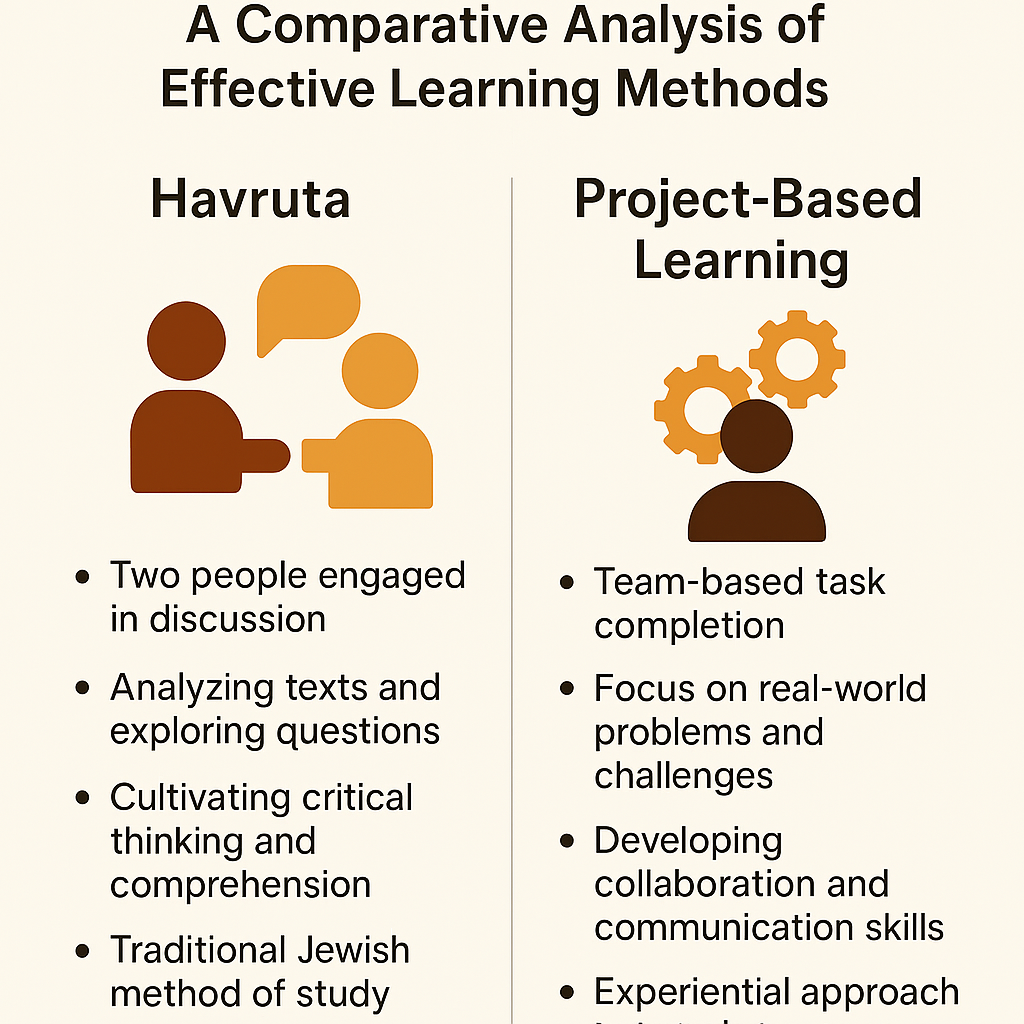
Havruta is a learning method rooted in Jewish educational tradition that develops thinking skills through questioning and discussion.
2.2. Key Characteristics
- *Question-centered learning*: Learners develop thinking skills by asking and exploring questions themselves.
- *Discussion-based learning*: Pairs engage in logical discussions to solve problems and expand their thinking.
- *Enhancement of critical thinking*: Learners build skills by analyzing and responding to their partner's arguments.
- *Collaborative learning*: Learning is maximized through sharing and respecting different perspectives.
- *Creativity boost*: Encourages creative thinking by approaching problems from new angles.
2.3. Advantages
✅ Increases students’ engagement by promoting active participation
✅ Cultivates logical reasoning and problem-solving skills
✅ Enhances communication and interpersonal skills through collaboration
2.4. Disadvantages
❌ May be difficult for students unfamiliar with discussions
❌ Ineffective questioning can reduce learning efficiency
❌ Time-consuming, which may hinder swift progress
3. Project-Based Learning (PBL)
3.1. What is PBL?
PBL is a learning approach where students gain new knowledge by carrying out projects centered on real-world problem-solving.
3.2. Key Characteristics
- *Problem-solving centered learning*: Learning is based on real-life issues.
- *Development of creativity and inquiry skills*: Students explore solutions independently, fostering creative thinking.
- *Team-based learning*: Group activities build teamwork and communication skills.
- *Self-directed learning*: Students set goals and methods for their projects, developing self-directed learning abilities.
- *Practical skill development*: Engaging in real projects builds practical competencies.
3.3. Advantages
✅ Enhances real-world problem-solving skills
✅ Fosters both creative thinking and practical skills
✅ Encourages active participation while building teamwork
3.4. Disadvantages
❌ Planning and preparation can take a long time
❌ Without an effective feedback system, it can be hard to define learning goals
❌ Individual assessment is difficult, and measuring team member contribution can be challenging
4. Havruta vs. Project-Based Learning: A Comparative Analysis
Thanks! Here’s your chart polished and perfectly aligned for a professional presentation or report:
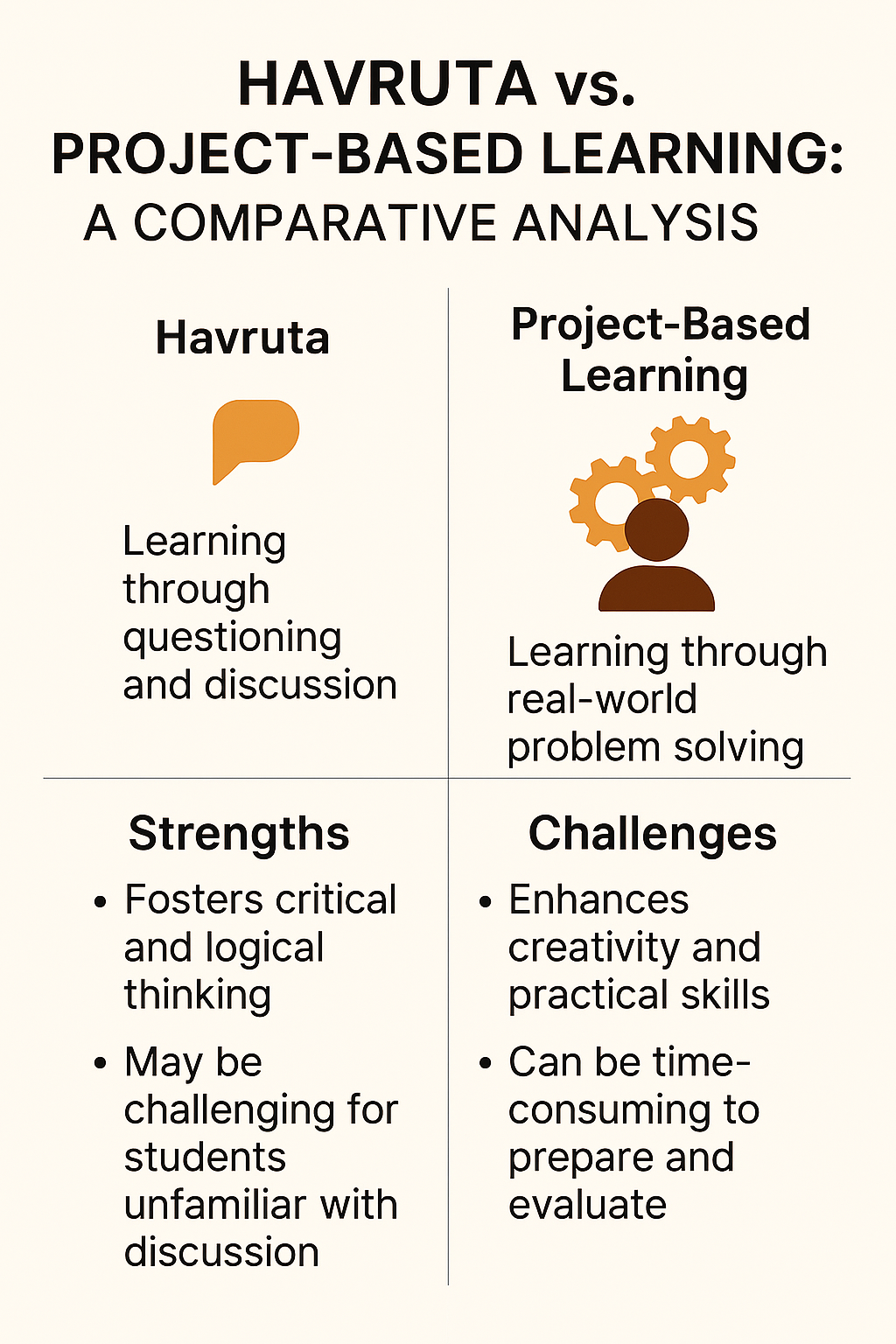
In short, Havruta promotes thinking through discussion and questioning, while PBL focuses on solving real problems and building practical experience.
5. Conclusion
Both Havruta and PBL nurture students' thinking and creativity through different approaches. The key is choosing the right method based on learning objectives:
- Choose PBL for fostering creative problem-solving and hands-on experience.
- Choose Havruta** to strengthen logical and critical thinking skills.